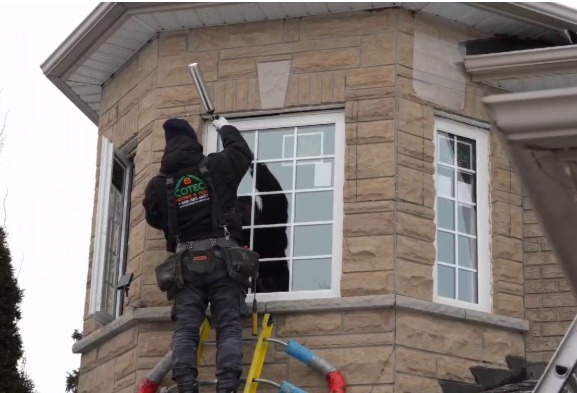
The first real cold snap of the season has a way of showing you which rooms in your house don’t hold heat. A bedroom that felt fine in October feels different at the end of November. The front hall picks up a draft you can feel at your ankles. Frost forms in the bottom corner of an old window.
For many homeowners, that’s the moment they start thinking about winter window replacement or a new front door. It’s often also the moment they decide to wait, assuming replacement is a spring or summer job and that opening up a wall in January means a cold house, a mess and a poor seal.
It’s a fair worry, and it’s largely outdated. Windows and doors are routinely installed through Canadian winters. What matters most isn’t the season. It’s how the installation is planned and carried out.
Winter Is When the Problem Is Easiest to See
Cold weather exposes weak points. Natural Resources Canada’s home energy guide, Keeping the Heat In, suggests checking for drafts on a cold day, and notes that air leaks are easier to find when it’s windy. On a cold, windy day, walk through your home and note:
- Which rooms feel noticeably colder than the rest
- Where you can feel moving air: around a window frame, at the sash, under or around a door
- Any frost or ice on the inside of the glass or frame
- Doors that show daylight at the edges or threshold
Not every draft comes from a window or door, so a good product specialist should help you pinpoint which openings are the problem before recommending anything.
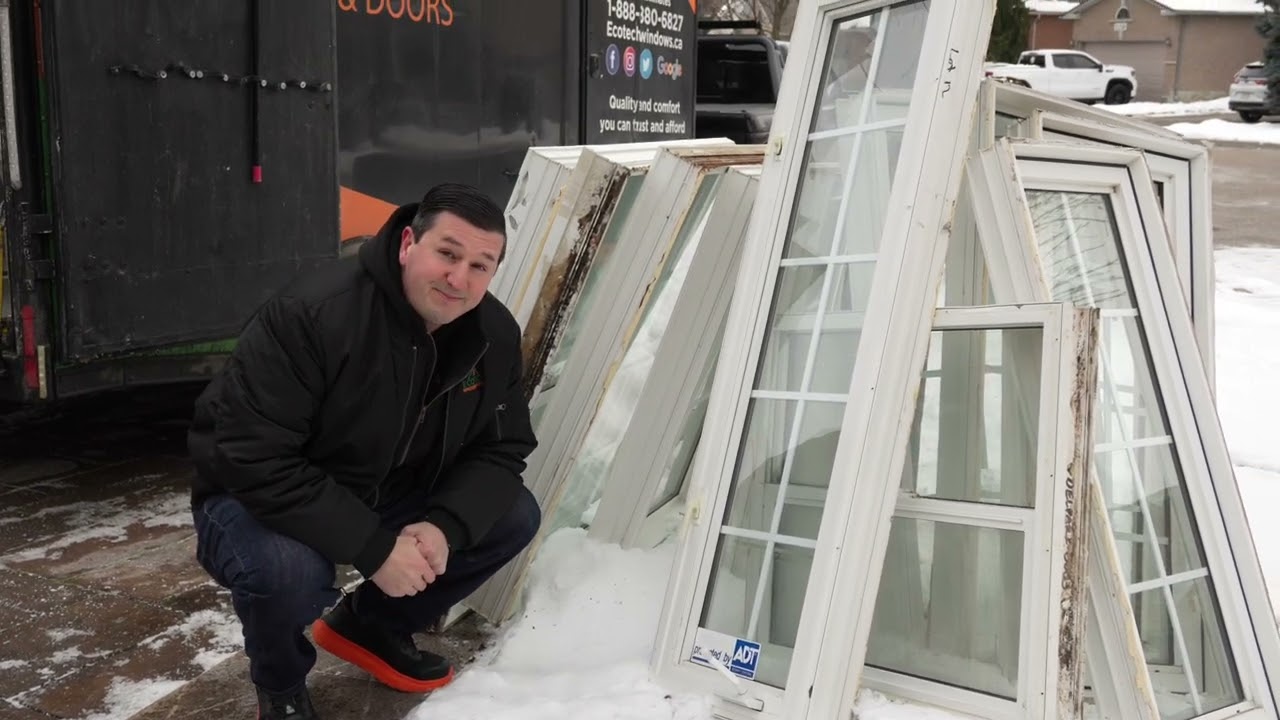
What Happens on a Winter Installation Day
The biggest concern homeowners raise is heat loss while the old window is out. In practice, a careful crew doesn’t leave openings exposed for long.
At EcoTech, installers work on one window at a time, and the time an opening is actually open to the outside is usually only 10 to 15 minutes. Interior doors are closed to keep heat in the rest of the house while the crew works in a given room. You’ll feel cooler air in that room for a short while; the rest of the house stays largely as it was.
The basic steps are the same in any season: the old unit comes out, the opening is checked and prepared, the new window is set, levelled and secured, and the gap between the frame and the wall is insulated and sealed before the trim goes on. Entry doors and patio doors are installed in winter too. Because a door opening is larger, ask how long it will be open and how the rest of the house will be protected. You can read more in our FAQ, Can I Replace Windows in Winter in Ontario?

Cold-Weather Materials Matter
The sealing step is where winter genuinely changes the job. Natural Resources Canada describes sealing the gap between the window frame and the rough opening with backer rod and caulking or low-expansion foam, and makes an important point: a poorly installed product can let in cold drafts even if the product itself is energy efficient.
In other words, the insulation and sealant around the frame matter as much as the window. What’s used on a January morning shouldn’t be an afterthought. EcoTech uses winter sealants designed to cure in sub-zero temperatures and a low-expansion, cold-weather foam that fills the gap without warping the frame.
Does the Temperature Matter?
Up to a point, yes. EcoTech aims to schedule installations on days above -15°C where possible, although its materials can handle colder weather. In Greater Edmonton or Northern Ontario, where January can bring stretches colder than that, a little flexibility on dates is part of planning a winter project. Heavy snow or strong wind can also be reasons to adjust, so ask how your installer handles a day when the forecast turns.

Questions to Ask Before a Winter Install
- How many openings will be open at once, and for roughly how long?
- How will the rest of the house be kept warm and clean while you work?
- What sealant and insulation do you use in cold weather?
- What happens if the weather turns on installation day?
- What does the warranty cover for installation, not just the product?
Clear, specific answers are a good sign. Vague ones are worth a follow-up question.
Winter or Spring?
Waiting for spring isn’t wrong. If you’re simply planning ahead, a spring project can make perfect sense, and starting the conversation now gives you time to compare quotes without rushing.
But if a room is uncomfortable now, there’s a practical case for not waiting. You’ve just felt the problem, so you know exactly which openings to focus on, and you may notice the difference in that room right away, in the season when comfort matters most.
The Bottom Line
Winter doesn’t rule out window or door replacement. With one window at a time, short exposure and materials made for the cold, it can be a comfortable, practical time to do the work. The questions are the same in any season: how the installation will be done, what’s used to seal it and what’s covered afterwards. EcoTech’s windows and doors are backed by a 25-year transferable warranty that covers product, installation and labour.
“Most people who call in December assume we’ll tell them to wait until April,” says Sherry, a product specialist with EcoTech. “Usually the better first step is a walk-through. Show us the rooms that feel cold, and we’ll talk through whether it’s the windows, the door or something else, and what a winter install would look like for your home.”
If a room in your home is telling you something this winter, book a no-obligation in-home consultation with an EcoTech product specialist or call 1-888-880-6827.
Frequently Asked Questions
1. Will my house get cold during a winter window installation?
Not for long. EcoTech’s installers work on one window at a time, and an opening is usually open to the outside for only 10 to 15 minutes. Interior doors are closed to keep heat in the rest of the house while the crew works in each room.
2. Can entry and patio doors be installed in winter?
Yes. EcoTech installs doors in winter as well as windows. Because a door opening is larger, your installer should explain how long it will be open and how the rest of the house will be protected. Book a no-obligation in-home consultation to talk through your project.
3. How cold is too cold to install windows?
EcoTech aims for installation days above -15°C where possible, though its cold-weather sealants and foam can handle colder conditions. Very cold days, heavy snow or strong wind can be reasons to adjust the date.